
Diary in the Desert: Journey Through Djibouti
- Jan 20, 2020
- 10 min read
Updated: Nov 13, 2024

In the early days of 2019, I returned to my post in Djibouti after spending the holidays at home in Florida. Concluding a long 25-hour journey, I entered a strange apartment in the wee morning hours. My (new) flatmate wouldn't join me for another two weeks. The WiFi was down and the water was out, but at least it was a place to stay. This would be the place I would call home for the next few weeks. Tired after my journey and with plans to return to the UNHCR office in the morning, I huddled onto a thin mattress (about 3" in depth) on the floor of an empty room to get a bit of rest.
At the time, I had already spent almost two years in Djibouti. My housemates/colleagues and I were kicked out of the place we were living over a dispute with the landlord. I was taken in by another UN colleague, who happened to live right next door to our old home. My days here were dwindling in Djibouti, coming to an end. While one would be eager to return to an environment of comfort, I knew already I was going to miss these challenges.
As I write this, I reflect on where I am now, living and working in the middle of Washington, DC to where I started the year, living a simpler life in Djibouti.
How quickly things can change! How quickly environments change!
Change often comes when you least expect it. When it comes, it can completely transform your world!
I returned to Washington from a unique experience living and working in Djibouti with the UNHCR operation there. Looking back, as I was preparing to go abroad, people were rather surprised, and a bit cautious about the opportunity. And now that I'm back, they are still surprised, but in a different way—surprised that the experience in this little-known corner of the world reaped a lot of good memories. Instead of blogging or journaling as I went through the experience, I am writing these so-called memoirs so that I can give more thoughtful reflection.
In writing this, I thought about focusing on the actual experience—the day to day adventures and the little interactions and experiences that shaped my time there. I then realized it would be a more impactful piece if I reflected upon how the experience affected me. In the few months that I've been back home, I constantly remember things—sometimes at random moments—even the tiniest of details, that fill me with overwhelming gratitude for the experience. Every day in that small but busy operation was packed with activity and adventure. I hope my memory will serve me well and keep good record of those moments. Even now, I just close my eyes and I am back on that dusty road between home and the office with the heat beating down, where I started nearly every day. I remember the strong resolute spirit of many of the refugees I met. Bravely in this new land, they have struggled to rebuild their lives, looking ahead not back, with aspirations to improve the outlook for better futures particularly through jobs and education. My job was to convey their needs and long-term hopes to people, advocating on their behalf so that they could indeed have a chance to realize those dreams.
I didn’t seek Djibouti. Djibouti sought me. I had been working at the IMF for over five years, and I had been longing to expand my career with work experience with the UN and some time living abroad. It had long been my goal. As a teenager I realized I wanted my life’s career to be dedicated to international service, something to help the conditions of others. In high school, I thought I wanted to be a diplomat, but in college, dreams of the UN formed out of intellectual curiosity and a heightened sense of altruism nurtured by professors and their coursework. Fast-forward to late spring of 2017, an offer came so unexpectedly, so out-of-the-blue—an opportunity that I had been preparing for and waiting for, for quite some time. It would change the life I knew—UNHCR extended an offer to cover external relations for the operation in Djibouti! It was initially a temporary contract of six months, which I was a bit apprehensive about (leaving a city I had grown in for the past ten years and a job I had been at for the past five years for something halfway around the world that might only last six months), but the bigger picture had me envisioning a once-in-a-lifetime adventure to seize. I threw caution to the wind and took the risk. I left my job and packed up everything, prepared for the event I may have to return after six months. I ended up staying a good 21 months.
Coming into the endeavor, I didn't know what I was getting into. The position was offered with a rather vague terms of reference, but I think I adapted well. I came to find I was like a whole communications team rolled into one person. I drafted talking points and publications. I talked to the media, donors, and anyone interested in the refugee situation. I also facilitated the visits of journalists wanting to visit the camps. I designed shirts, banners, and posters for visibility. I drafted funding proposals to donors. I wrote articles/human interest stories. I had no previous exposure to humanitarian work, but I was determined to learn quickly. Sure, there were response mechanisms and new jargon to learn, but it was never overwhelming. The whole experience would prove to be a big trial of learning by doing. Once you get started, you see how logical action is, that our work was largely reactive, aiming to respond to the needs of the incoming refugees and taking care of the existing populations and aspiring to help attain the most dignified lives as possible while in Djibouti. The wide range of duties I was given enabled skill building and good exposure to many critical areas that I am confident will help later in my career. What I appreciated a lot was the encouragement to participate, to have good accountability over bigger responsibilities, as well as the creative license to innovate in getting the work done. In addition to being at the forefront in meetings with donors like the local German, Chinese, and Japanese delegations, I engaged some of the biggest names in the world of news--CNN, Al Jazeera, CBS, and more.

Perhaps the aspect of my job that I enjoyed the most was briefing and engaging people on the refugee situation—especially in person or over phone/Skype calls. This was the main purpose of my role. Being in the field gives you an advantage in that you are witness to the situation on the ground and can paint a picture of the context for others. I remember my very first mission/visit to one of the camps only a few days after arrival in Djibouti. I shadowed my programme colleague, who was facilitating the visit of a donor group. She had answers ready for every question. I was in awe and wondered how I could ever know so much about the context. My colleague was right when she said it just comes to you, and I, too, will master the ropes and know the ins and outs of the situation. These inquirers would come with a whole host of questions—some basic, trying to get an overview of the situation; some more specific, asking about conditions at the settlements, the learning opportunities for the children, etc. I met with visiting media and donors and took inquiring phone calls from everyone including students back in the U.S. curious to learn. Sharing the insight and heightening their awareness of the situation was indeed rewarding. In my role as advocate, I was helping to amplify the voices of the refugees, who especially in a small country like Djibouti, may often go forgotten or overlooked. I also appreciated the creative authority I was given. No one really hovered over you to make sure things were done or done in certain ways. They trusted you and knew that you had the right judgment to go to others as appropriate resources if needed. Not only was I and many junior colleagues given a seat at the table, I was also granted a license to be innovative in shaping our advocacy. Being allowed to do—to get hands on with engagement, implementation, and monitoring—gave way to strengthened skill building and learning through experience.
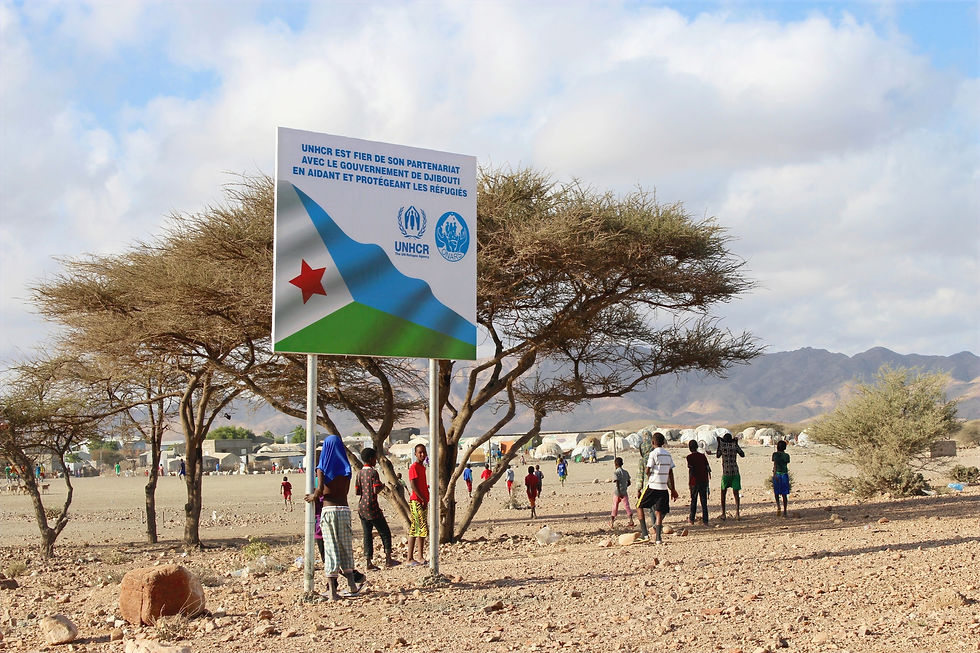
The biggest plus of working in the field is the immersion experience. You're able to interact with the people you serve and see their challenges and needs in person. You're able to coordinate with a wide variety of actors who are also working for refugees—from the local government to donors to other UN agencies and NGOs. You see firsthand the efforts needed to ensure you're working together effectively, working as one for the same cause, and maximizing your impact to hit targets. I remember all of my missions to the camps either to cover events, meet refugees who had stories to share, or accompanying donors and the media. One of the most memorable visits was when I ventured solo to the Markazi camp, the furthest away in the hot deserts of Obock, to interview Haytham, a young Yemeni barely into his 20s who fled the conflict in his homeland, settled in the camp for a few months, and then worked his way out of it by working at a juice bar and saving his earnings to open his own restaurant. In doing so, he transformed the community, introducing Yemeni cuisine and bringing jobs to locals. You can read more about Haytham in the article I wrote and published on his entrepreneurial spirit.

On the other hand, because you're on the front lines, you often have to confront problems and challenges head on. To the outside world, perhaps the work of humanitarians is idealized as noble and creating good, but reality has to be confronted if we are to try and improve people's well-beings. The coordination I mentioned earlier is easier said than done. Maybe as a rookie, I admittedly sometimes felt that my efforts or the wider humanitarian presence on the ground wasn't enough to really deliver quality and impact. There was sort of a feeling of inadequacy, despite delivering on objectives. Then again, it could be just me and my tendency to be humble about contributions. In trying to do the best I can with the role I played, I learned how to think on my feet, how to be more resourceful in finding solutions, how to operate despite very real pressures and challenges, as well as how to move on or overcome after things going not quite as planned. When situations get messy or chaotic, it actually always turns out ok in the end. Things fall into place and anything that seemed like a potential setback didn't kill you in the end!
I learned much and absorbed a lot of good vibes from the people around me, especially in such situations that challenged. The good mentorship of the Country Representative and senior staff as well as the collaboration with colleagues were invaluable. I also lived with a senior protection officer, which turned about to be a great experience because she was not only a veteran with UNHCR but had profound insight and experience in humanitarian relief that really helped a rookie like myself. The people around me—the colleagues, the people we were helping, the partners, the locals—were really central in making the experience what it was. You see so much of each other, and especially in a small operation like Djibouti's, there's a strong sense of friendship--something to help one another with the day-to-day ups and downs.
Ultimately, I had to leave because my contract was up and funding to the operation (as is the case with many UN operations worldwide) was very tight. As fate would have it, I landed back in Washington, working across the street from where I had started—completely by chance. From time to time, I see familiar faces of my recent past. I could have gone anywhere in the world, but I guess something was pulling me back here. I think often of Djibouti with a profound appreciation of the adventure and growing I did over that time.
Sometimes I feel as if the whole Djibouti experience were a dream largely because life there and life here are so drastically different. When I think of it, the imagery and sensation are still fresh in my memory. I close my eyes and I am running down the halls of the office with my camera and notepad in hand, seconds from jumping into a car and onto meetings or special events with the government.
I close my eyes and I'm in the infamous white Land Cruisers of the UN fleet, being jostled about as the vehicle cuts through rocky, unpaved roads leading to the camps. I am walking on the hot, dry, and rugged terrain of the camps, conversing with the refugees, hearing their stories, sometimes with three tiered translation—turning questions asked in French into Arabic then notes taken in English.
I close my eyes and I'm at my desk with the window open and the warm air wafting in while visiting journalists sit around me, asking tons of questions, outlining their proposed angles for their stories, attempting to iron out any logistical roadblocks, and preparing for their visit to the field.
Djibouti was a lot of things. It was exciting. It was challenging at times. Above all, it was the most enriching period of my life so far. I would often think that work didn't feel like work. I was genuinely satisfied with my role in the scheme of things as well as the overall outcomes we were targeting as a team. It was not only the feeling that you are contributing to improving the lives of refugees, though that in itself was a chief motivation for taking the leap—but the bigger picture itself, of living halfway around the world in a little-known corner, and actually doing something you can put your passion behind.
Djibouti was a lesson in living more boldly and taking risks. It was also a lesson in just living--living without constantly comparing yourself to others, living without concern of material things, and living through experience--with the diverse environments I found myself in and the variety of people I met. There I thrived--relishing what I realize is one of the things I do and love best--getting to know others, especially complete strangers. But out of everything the experience has given me, the most important thing is it solidified what I want to do with the rest of my career. Djibouti gave me confidence that I can make positive contributions in humanitarian and development work and that being on the front lines in the field may test you, but places you to better understand the dynamics of the situation and much more. Perhaps one day soon, I will get another opportunity pushing me further in that direction. I am more open to taking chances now than ever before, confident that I can manage but also eager to take on the unknown.


Comments